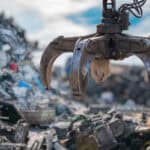
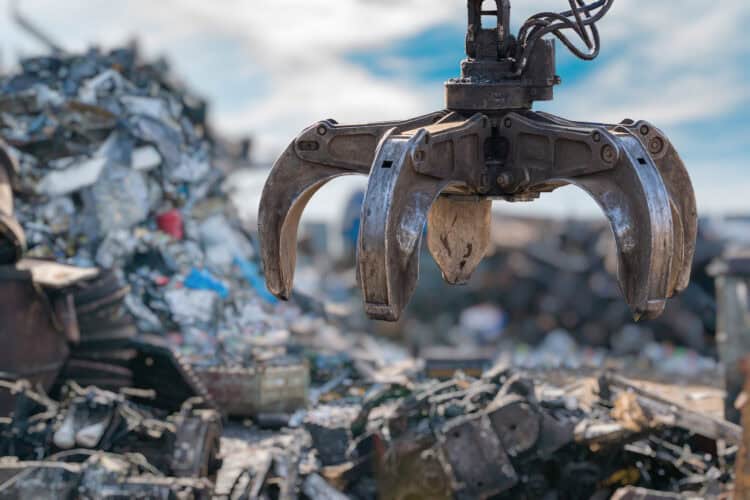


At the end of their lives, automobiles are sent to specialized material recovery facilities (MRFs) that shred or break them down into more manageable sizes for recycling, resale, and reuse. These broken-down materials are known as auto shred residue, or ASR. According to the Automotive Recycling Association (ARA), more than 4 million automobiles are recycled every year in the U.S. and Canada alone.
Because of the complexity of car recycling, the automotive recycling industry is relatively young. It began as far back as the 1920s as a fairly specialized and uncommon practice, becoming more widespread in the 60s and 70s. Today, it is a billion-dollar industry projected to continue growing.
What is in ASR?
ASR consists of a variety of materials including:
- Ferrous and nonferrous metals
- Rubber
- Glass
- Plastics
- Wood
- Textiles/fiberous materials
- Other materials like dirt and gravel
The majority of automobile shredder residue consists of ferrous and nonferrous metals (typically around 80% of ASR). The leftover non-metal materials are often called ‘auto shredder fluff’ (sometimes just ‘shredder fluff’ or fluff’). These materials make up the remaining 20% of auto shred waste.
Because vehicles are built and fueled with a variety of different fluids, ASR will often contain hazardous materials. Hazardous materials in ASR include heavy metals such as lead or cadmium; PCBs (polychlorinated biphenyls); and residual automotive fluids, such as motor oil, transmission fluid, brake fluid, and gasoline. When these hazardous materials exceed a certain threshold (this varies by state and country; make sure you check local guidelines and regulations), they must be disposed of properly rather than recycled or reused.
ASR Recycling Process
Because there are so many different materials are mixed together in auto shred residue, the material recovery process must be thorough. Processes may vary from one facility to another depending on equipment used, but most follow the same general steps.
The process begins with pre-treatment. Vehicles are collected and drained of all fluids to ensure the recovered ASR isn’t hazardous. These fluids are then recycled or properly disposed of. Then the vehicles are dismantled, with tires, wheels, reusable parts, batteries, catalytic converters, and other hazardous components removed. Once only the vehicle body remains, it is shredded into smaller, more manageable pieces for downstream sorting. Shredders feed material to highly durable equipment, such as an Under Mill Oscillator (UMO), which feeds it to downstream equipment.
First, the metals pass through a magnetic separator to separate ferrous metals (iron, steel) from nonferrous metals (lead, copper, aluminum, brass, etc.). After ferrous metals are removed, the remaining material mix is sent through an eddy current separator to separate nonferrous metals from nonmetals for auto shredder fluff removal.
Then, the auto shredder residue is sorted by density using a density separator, separating lighter material from heavier material. Alternatively, by size, using a scrap screen to remove smaller materials from larger ones. Once separated by size and/or weight, the residual auto shredder residue fractions are classified as shredder light fractions (SLF) and heavy fractions (SHF).
Finally, the residual scrap metal is cleaned. Some facilities also polish and clean auto shredder residue using scrap metal polishing equipment. Polished scrap metal yields higher quality melt values for metal recycling, increasing its value.
Auto Shredder Fluff
The remaining 20% of nonmetallic auto shredder fluff used to be landfilled; in recent years, automotive recyclers have been finding more innovative uses for it. If it meets nontoxic EPA requirements, auto shredder fluff can be reused as landfill cover, a protective layer that covers waste in landfills to control odors, prevent pests, and stop rain from entering. Additionally, ASR fluff can be used as an energy source in waste-to-energy facilities.
Environmental Benefits of ASR Recovery
Recycled materials save natural resources and reduce the space they occupy in landfills. In addition, recycling is more energy- and cost-efficient than sourcing raw materials. Steel, for example, is much more energy-efficient to recycle (74% energy savings) than to produce.
How GK Can Help
General Kinematics offers a variety of scrap and ASR recovery solutions. GK Systems designs and builds turnkey scrap metal recovery systems for both metal recycling and car recycling. Contact GK if you want to increase your ASR recovery rates, and we’ll help you maximize your return on investment.